
Best Stargazing Campgrounds in Georgia for Dark Sky Adventures
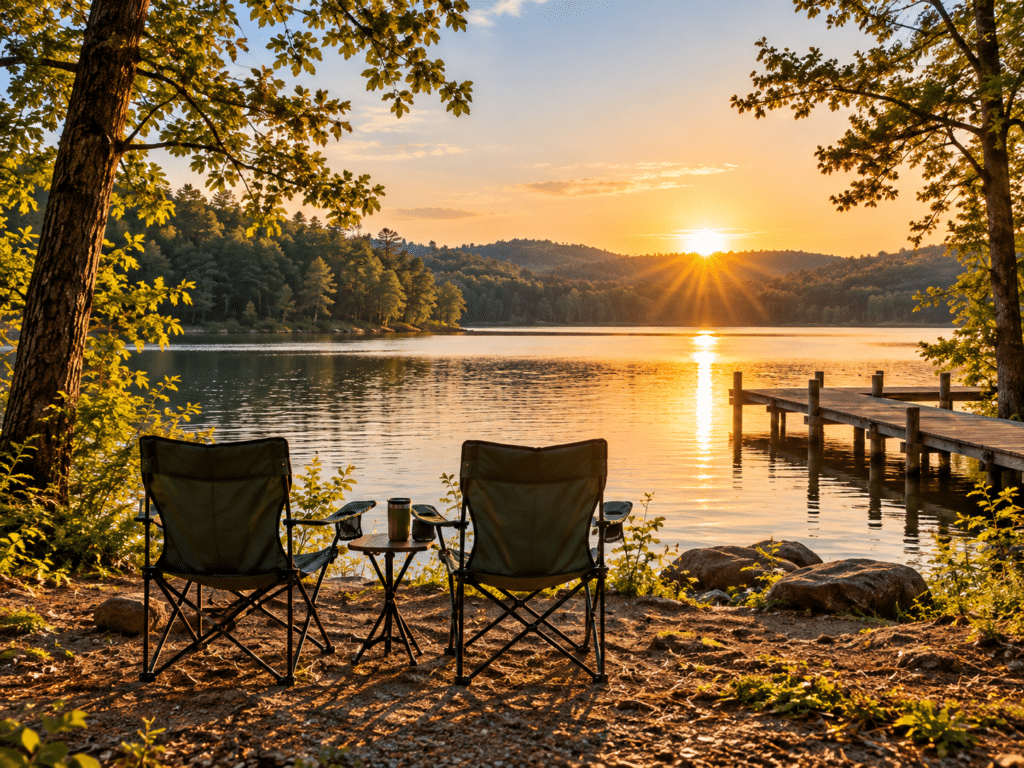
Once the campfire dies down and the campground gets quiet, some of Georgia’s best scenery can appear overhead.
Away from the bright lights of Atlanta and other cities, campers can find mountain valleys, rural forests, and remote wetlands where stars are much easier to see. South Georgia is home to one of the state’s standout dark-sky destinations, while North Georgia offers mountain settings where a clear night can become one of the highlights of a camping trip.
Finding the best stargazing campgrounds in Georgia isn’t simply about choosing a campsite far from town. Light pollution, weather, tree cover, the moon phase, and your view of the horizon can all affect what you’ll see.
Some destinations are worth planning an entire camping trip around, while others make it easy to add an evening of stargazing to a mountain or weekend getaway. From the Okefenokee Swamp to the North Georgia mountains, these are some of the best places to combine camping with a night under the stars.
What Makes a Good Stargazing Campground in Georgia?
Darkness matters most. Artificial light from cities, highways, businesses, and even neighboring campsites can wash out faint stars and make it harder to see the Milky Way.
That doesn’t mean you need a completely isolated campsite. A campground near a large protected forest, wetland, or sparsely populated mountain area can put you within easy reach of darker viewing locations.
The moon matters just as much. A bright full moon can overpower many faint stars, even in a remote location. Georgia State Parks recommends checking the lunar cycle and planning around a new moon or a period when the moon is below the horizon when possible.
Clear skies, low humidity, and an unobstructed view also help. Once you find a good viewing spot, give your eyes time to adjust instead of immediately reaching for a bright phone or flashlight. Full dark adaptation can take around 30 to 40 minutes.
1. Stephen C. Foster State Park and the Okefenokee Swamp
For serious stargazing, it’s difficult to start anywhere other than Stephen C. Foster State Park.
Located deep within the Okefenokee National Wildlife Refuge in South Georgia, the park is recognized by DarkSky International as an International Dark Sky Park. Its remote location and surrounding wilderness protect it from much of the artificial light found around Georgia’s more populated areas.
On a clear, moonless night, visitors may see far more than the familiar stars visible from their backyards. The park notes that the Milky Way can be seen stretching across the sky, while planets, satellites, meteors, constellations, and other celestial objects may also be visible depending on the season and conditions.
Summer can be especially rewarding because the brighter central region of the Milky Way is visible during this part of the year in the Northern Hemisphere.
Stephen C. Foster also hosts astronomy and dark-sky programs at selected times, giving visitors opportunities to learn more about what they’re seeing overhead. Campers interested in making stargazing the main purpose of their trip can check the Stephen C. Foster State Park astronomy information before choosing their dates.
Camping Near the Okefenokee
Stephen C. Foster has its own campground, but campers exploring another side of the Okefenokee can also consider Okefenokee Pastimes Cabins & Campground in Folkston.
The campground is near the eastern entrance to the Okefenokee National Wildlife Refuge, making it a useful base for travelers who want to combine camping with swamp exploration and evenings away from Georgia’s larger cities.
This part of the state also works naturally into a longer South Georgia camping trip. Travelers exploring the region can find additional options among the Sunshine District campgrounds.
2. Providence Canyon State Park
Providence Canyon State Park offers a very different setting for a night beneath the stars.
Known as Georgia’s “Little Grand Canyon,” the park is best known for its colorful gullies and unusual geological formations. During daylight hours, visitors come for hiking and canyon views. Once darkness arrives, its rural location in southwest Georgia provides another reason to stick around.
Georgia State Parks has hosted astronomy programs at Providence Canyon that include guided night-sky viewing and opportunities to observe celestial objects through telescopes. That makes it more than a scenic hiking stop for campers interested in astronomy.
A visit can easily become an all-day outdoor adventure: explore the canyon trails during daylight, have dinner and give yourself time to rest, then head outside after dark when the stars begin appearing.
Because astronomy programs and park hours can vary, check current park information before planning an evening visit.
3. North Georgia Mountains
South Georgia may have the state’s best-known certified dark-sky destination, but the mountains offer a completely different night sky camping in Georgia experience.
Head away from the busier towns and deeper into the mountains, and development becomes increasingly scattered. Forests, mountain valleys, lakes, and large stretches of protected land create opportunities to get farther from concentrated urban lighting.
The scenery is part of the appeal, too. You can spend the afternoon hiking beside a creek or exploring a mountain town, return to the campground for dinner, and finish the night looking for constellations.
Campers have several Go Camp Georgia member campgrounds in this part of the state, including:
- Long Ridge Campground in Hiawassee
- Mountain View Campground in Hiawassee
- Skeenah Creek Campground in Suches
- Jenny’s Creek Family Campground in Cleveland
- Leisure Acres Campground in Cleveland
These shouldn’t be confused with officially designated dark-sky parks. Instead, their locations provide camping bases for exploring rural areas of North Georgia where campers can seek out darker viewing spots.
North Georgia is particularly useful when you want more from the trip than stargazing alone. The same getaway can include waterfalls, hiking, fishing, scenic drives, and some of Georgia’s best mountain lakes and nature camping.
That makes the mountains a strong choice for campers who want the stars to be one memorable part of the trip rather than the entire reason for going.
4. Brasstown Bald and the Hiawassee Area
At 4,784 feet, Brasstown Bald is the highest point in Georgia and one of North Georgia’s most recognizable mountain destinations. The surrounding Chattahoochee-Oconee National Forest also places visitors well away from the concentrated lights of metro Atlanta.
During the day, the area is popular for mountain views, scenic drives, and hiking. At night, the broader Hiawassee and Young Harris area can give campers opportunities to look for darker skies from suitable locations away from town lighting.
One important detail is that you shouldn’t assume the Brasstown Bald observation deck itself is available for casual stargazing after hours. Access and operating hours can change seasonally, so check current U.S. Forest Service information before building an evening around the summit.
For an overnight base, Long Ridge Campground and Mountain View Campground, both in Hiawassee, put campers in this part of the North Georgia mountains. Neither should be described as an officially designated dark-sky campground, but their locations make them practical options for a trip that combines mountain camping with nighttime sky watching.
The biggest advantage of this area is everything you can do before sunset. A weekend can include hiking, mountain overlooks, waterfalls, Lake Chatuge, and scenic drives before ending the day outside beneath the stars.
5. Suches and the Cooper Creek Area
Sometimes finding darker skies is as simple as getting farther away from major highways and larger towns.
Suches is a small mountain community surrounded by the Chattahoochee-Oconee National Forest. The surrounding area includes creeks, forest roads, hiking trails, and large stretches of undeveloped mountain terrain, giving campers a much different nighttime environment than they would find closer to Atlanta.
Nearby Cooper Creek Recreation Area offers camping, fishing, hiking, and access to the Cooper Creek and Mulky Creek trail systems. The forested surroundings are excellent for daytime recreation, although tree cover means you’ll want to look for a safe, open viewing area if stargazing is one of your priorities.
Skeenah Creek Campground in Suches is a Go Camp Georgia member that fits naturally into a trip through this part of the mountains. Campers can use the area as a base for exploring nearby trails and forest destinations during the day before enjoying quieter mountain evenings.
This is also a good example of why the best dark sky campgrounds in Georgia aren’t necessarily properties marketed specifically for astronomy. Sometimes location is the biggest advantage. A rural campground surrounded by mountains and national forest can put you much closer to areas with limited artificial light.
6. Fort Mountain and the Chatsworth Area
Fort Mountain State Park is another North Georgia destination worth considering when camping and stargazing are both on the itinerary.
The park sits in the Cohutta Mountains and covers more than 3,700 acres, with hiking and biking trails, a lake, mountain scenery, and overlooks. Its location in northwest Georgia takes visitors away from the dense development and brighter skies found closer to Atlanta.
During the day, campers can explore trails leading through hardwood forest and past the park’s mysterious ancient stone wall. The overlook areas also provide broad mountain views, although visitors should always follow current park hours and nighttime access rules rather than assuming a daytime overlook remains accessible after dark.
Campers exploring the area can consider 411 River Rest Campground in Chatsworth as a nearby Go Camp Georgia member. It provides another option for staying in this part of northwest Georgia while building a trip around Fort Mountain and the surrounding Cohutta landscape.
North and South Georgia offer noticeably different camping experiences, and those differences extend to stargazing trips. The mountains provide elevation, forest scenery, and cool-weather camping opportunities, while South Georgia has vast wetlands and rural landscapes. Those contrasts can help when deciding between North vs. South Georgia camping.
7. Stone Mountain for Stargazing Near Atlanta
You don’t necessarily need to drive to the Okefenokee or deep into the North Georgia mountains to spend an evening looking at the sky.
Stone Mountain provides a much more accessible option for campers searching for stargazing spots near Atlanta. However, expectations matter. Because the park is within the Atlanta metropolitan area, light pollution is significantly greater than it is in remote South or North Georgia.
That means Stone Mountain isn’t the place to choose if your main goal is finding Georgia’s darkest possible sky. It makes more sense for families, beginning stargazers, or campers who want to combine an Atlanta-area camping trip with casual astronomy.
Brighter objects such as the moon, planets, and prominent constellations can still make for an enjoyable evening under suitable conditions. Timing your outing around a clear night can make a noticeable difference.
Stone Mountain Park Campground makes this particularly convenient because families can camp within Stone Mountain Park rather than making stargazing a separate road trip.
For someone new to astronomy, accessibility can sometimes matter more than finding perfect darkness. A night spent identifying a few constellations with the kids may be a better introduction than driving several hours to a remote destination.
North Georgia or South Georgia: Which Is Better for Stargazing?
Both can work, but they offer different experiences.
South Georgia has the strongest choice for campers specifically chasing dark skies: the Okefenokee. Stephen C. Foster State Park’s International Dark Sky Park designation gives visitors something most other Georgia destinations cannot claim—recognized protection of its exceptionally dark nighttime environment.
North Georgia offers more variety. A mountain camping trip can combine stargazing with hiking, waterfalls, lakes, fishing, and scenic drives. Rural mountain communities such as Suches and Hiawassee also make it easier to move away from Atlanta’s glow without traveling all the way to the Florida line.
Your choice may ultimately depend on the purpose of the trip. For a dedicated astronomy weekend, the Okefenokee stands out. For a broader camping vacation where stargazing is one activity among several, North Georgia’s mountain lakes and nature camping can be a better fit.
When Is the Best Time to Stargaze in Georgia?
You can stargaze throughout the year in Georgia, but some nights are much better than others. Moonlight, clouds, humidity, and the time of year can all affect how much of the night sky you can see.
Plan Around the New Moon
The moon is one of the first things to check when planning a stargazing trip.
A full or nearly full moon can brighten the sky enough to hide faint stars and parts of the Milky Way. For darker conditions, plan your trip close to the new moon or choose a time when the moon will be below the horizon during your viewing session.
Georgia State Parks recommends checking both the moon phase and moonrise and moonset times when planning a dark-sky visit.
Give Your Eyes Time to Adjust
Don’t expect to step out of your RV and immediately see everything the night sky has to offer.
Your eyes need time to adjust to darkness. Georgia State Parks notes that full dark adaptation can take around 30 to 40 minutes. Looking at a bright phone screen, vehicle headlights, or a regular flashlight during that time can interfere with the process.
A flashlight or headlamp with a red-light setting is useful around the campsite because red light has less effect on night vision.
Watch the Weather
A moonless night won’t help much when thick clouds cover the sky.
Check the forecast before driving to a viewing location, paying particular attention to cloud cover and the possibility of storms. Georgia’s humidity can also create hazier conditions, especially during warmer months.
Don’t automatically cancel a camping trip because one night looks cloudy, though. A two- or three-night stay gives you more chances for the weather to cooperate.
Summer Is a Good Time to Look for the Milky Way
Summer nights can be hot and humid in Georgia, but they’re also rewarding for stargazers.
The brighter central portion of the Milky Way is visible during summer in the Northern Hemisphere. From a sufficiently dark location, it can appear as a pale, cloudy band filled with countless stars rather than the sharply defined streak often seen in long-exposure photographs.
The Okefenokee is particularly impressive under genuinely dark conditions, while mountain campers can combine evening stargazing with cooler temperatures at higher elevations.
Plan Around Meteor Showers
A meteor shower can turn an ordinary camping night into one of the most memorable parts of the trip.
Several major meteor showers occur throughout the year. The Perseids are a favorite for summer campers, typically becoming active in July and August, while the Geminids provide another major viewing opportunity toward the end of the year.
You don’t need a telescope to watch meteors. Find the darkest open area you can safely access, allow your eyes to adjust, and give yourself plenty of time to watch the sky.
What to Bring for Night Sky Camping in Georgia
Stargazing doesn’t require expensive equipment. In fact, your eyes are enough to start identifying constellations, watching meteors, and enjoying the Milky Way from a truly dark location.
A few simple items can make the evening much more comfortable:
- Red-light flashlight or headlamp: Helps you move around without constantly ruining your night vision.
- Camping chair or blanket: Looking upward for an hour is much easier when you aren’t standing the entire time.
- Binoculars: A basic pair can reveal considerably more stars and help you explore brighter deep-sky objects.
- Star chart or astronomy app: Useful for identifying planets, constellations, and other objects overhead.
- Insect repellent: Especially important around the Okefenokee and during warm Georgia evenings.
- Extra layers: Mountain temperatures can drop considerably after sunset, even when the afternoon was comfortable.
- Water and snacks: Bring what you need before heading to a remote viewing area so you don’t have to interrupt the evening.
A telescope can be fun, but don’t feel like you need one. Georgia State Parks notes that binoculars can reveal objects that aren’t easily visible to the unaided eye, making them a practical choice for beginning stargazers.
Stargazing Etiquette at Campgrounds
A campground may seem dark until someone turns on bright exterior RV lights.
If you’re camping specifically for the night sky, keep unnecessary outdoor lighting to a minimum. Close blinds or curtains when interior RV or cabin lights are on, and use a red flashlight when walking around after dark.
Be considerate of neighboring campsites as well. Not everyone staying at the campground will be awake for astronomy, so normal quiet-hour rules still apply even if you’re planning to watch the stars until late.
Never wander onto closed trails, overlooks, boat ramps, or other areas simply because they appear to offer a better view. Confirm nighttime access and park hours beforehand, particularly at state parks and recreation areas.
FAQs About Stargazing Campgrounds in Georgia
Where is the darkest place to stargaze in Georgia?
Stephen C. Foster State Park in the Okefenokee is Georgia’s standout dark-sky destination. Its remote setting and International Dark Sky Park designation make it one of the best places in the state for serious stargazing.
What is the best campground in Georgia for stargazing?
For a trip centered specifically around astronomy, camping at Stephen C. Foster State Park provides direct access to the Okefenokee’s exceptionally dark skies. Other rural campgrounds in North and South Georgia can also provide convenient bases for reaching darker areas.
Can you see the Milky Way in Georgia?
Yes. Under sufficiently dark, clear conditions, the Milky Way is visible from Georgia. Stephen C. Foster State Park specifically identifies the Milky Way as one of the sights visitors can experience under its dark skies.
Are there good stargazing spots near Atlanta?
Yes, although light pollution makes conditions around Atlanta less impressive than remote parts of Georgia. Stone Mountain can work for casual stargazing, while traveling farther into North Georgia generally provides better opportunities to escape the metro area’s glow.
What time should I start stargazing?
Wait until well after sunset and astronomical darkness has arrived. The exact time changes throughout the year. Giving your eyes another 30 to 40 minutes to adjust to darkness can also help you see fainter stars.
Do I need a telescope for stargazing?
No. You can see constellations, planets, meteors, satellites, and the Milky Way without a telescope under suitable conditions. Binoculars are an inexpensive way to see more detail without carrying complicated equipment.
Spend a Night Under Georgia’s Darkest Skies
Some camping trips are remembered for the hike, the lake, or the view from the campsite. On a stargazing trip, the best part of the day may not begin until everyone else is getting ready for bed.
Georgia gives campers several ways to experience that side of the outdoors. You can make the long trip into the Okefenokee for genuinely dark skies, spend a weekend surrounded by the North Georgia mountains, or keep things closer to Atlanta with a casual night of watching the moon and constellations.
Choosing between northern mountain country and the quieter landscapes farther south becomes easier once you understand the differences between North and South Georgia camping. South Georgia’s Sunshine District campgrounds can also provide a starting point for travelers building a longer trip around the Okefenokee and other outdoor destinations.
Wherever you go, check the moon, watch the forecast, pack a red flashlight, and give yourself enough time outside for your eyes to adjust. You may be surprised by how different Georgia looks after dark.